
Legal Remedies for Domestic Violence in Marriage.
- May 19, 2026
Domestic violence isn’t just about bruises or broken bones. It’s a harsh reality for thousands of married women across India, but the damage goes way deeper than physical scars. Women face mental torture, emotional blackmail, financial control, sexual abuse, and suffocating restrictions—sometimes all at once. Most keep quiet, trapped by fear, family pressure, or simply not knowing what the law can do for them.
But the law’s on their side. Indian law gives survivors of domestic violence real, practical weapons to fight back—tools that protect their safety, dignity, and future. Let’s break down what those options look like, without the jargon.
Why Legal Protection Matters
- It keeps women safe sometimes, it’s quite literally a lifeline.
- Stops the cycle of abuse in its tracks.
- Offers financial support, so survivors aren’t left stranded.
- Guarantees a roof over their heads.
- Makes abusers answer for their actions.
- And above all, it helps bring back that lost sense of dignity.
Remember, the law’s here to help victims not to blame them.
What Counts as Domestic Violence
The Protection of Women from Domestic Violence Act, 2005, spells this out clearly. It’s not just hitting or kicking. It covers:
- Physical violence
- Sexual assault or harassment
- Verbal and emotional attacks
- Withholding money, food, or essentials
- Threats, stalking, and harassment
- Trying to control every move
And it’s not just husbands. Even in-laws and other relatives can be held responsible.
Who Can Ask for Protection?
- Married women
- Women in live-in relationships
- Divorced women still being harassed by ex-spouses or in-laws
- Widows who stay in the marital home
Basically, if you’re in a domestic relationship and facing abuse, you’re covered.
Key Legal Remedies
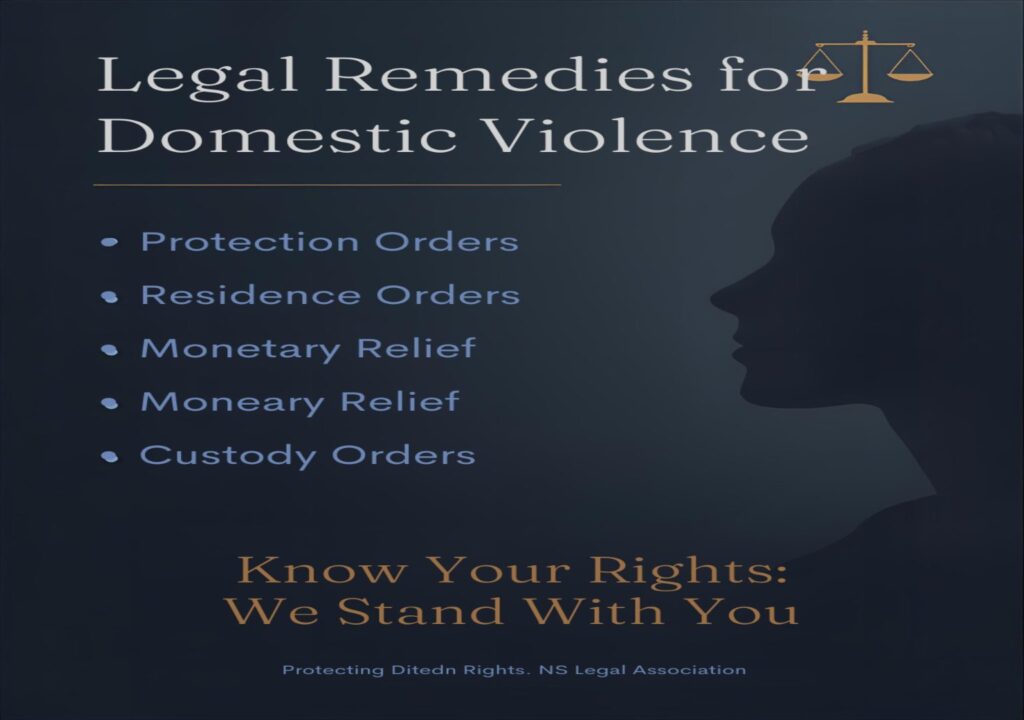
- Protection Order
This is a legal shield. The court tells the abuser: stay away, stop the threats, don’t show up at her home or office. If he breaks the rules, it’s a crime.
- Residence Order
The court can order that the woman can’t be kicked out of the shared home. If needed, the husband has to arrange another place or pay rent. Every woman has the right to a home.
- Monetary Relief
The law covers medical bills, lost income, daily expenses, and support for kids. The goal? Make sure money troubles don’t force women to stay in harm’s way.
- Custody of Children
Courts can give temporary custody of kids to the mother. They also decide on visitation, always putting the child’s well-being first.
- Compensation Order
Survivors can get money for physical injuries, trauma, and emotional pain. This isn’t just about cash—it’s about recognizing the real suffering behind closed doors.
- Criminal Cases
Besides the DV Act, survivors can use other criminal laws—like Section 498A (cruelty), Section 323 (hurt), Section 506 (threats), or Section 376 (sexual assault). Offenders get punished.
- Maintenance
Women can claim maintenance under Section 125 CrPC, the Hindu Marriage Act, or the Special Marriage Act. This money covers basic needs and helps build a new life.
How to File a Domestic Violence Case
Step 1:
- Reach out to a Protection Officer or a lawyer.
Step 2:
- Write a complaint describing what happened.
Step 3:
- File an application with the Magistrate under the DV Act.
Step 4:
- The court sends a notice to the abuser.
Step 5:
- The court can grant immediate protection or maintenance.
Step 6:
- Both sides present their evidence.
Step 7:
- The judge gives the final order.
Know Your Rights
- Free legal aid
- Safe shelter homes
- Medical help
- Confidentiality your privacy matters
- Fast-track hearings
The law puts survivors’ safety first.
What the Courts Say
- Inderjit Singh Grewal v. State of Punjab (2011):
Supreme Court said the DV Act is meant to help, not punish.
- Hiral P. Harsora v. Kusum Narottamdas Harsora (2016):
The court widened who can be held responsible.
- V.D. Bhanot v. Savita Bhanot (2012):
The law covers past abuse too not just what’s happening now.
Courts usually take the side of women when interpreting domestic violence laws.
The Real Challenges
- Shame and gossip from society
- Fear of what the abuser might do next
- No money to start over
- Family pressure to “adjust”
- Slow court cases
That’s why spreading awareness and building support networks matter so much.
Conclusion
Domestic violence in marriage strips away basic rights and self-worth. Indian law gives survivors solid ways to break free, find safety, get justice, and rebuild. Taking action can save lives. No one deserves abuse, and help is always there if you ask.
Need legal support for domestic violence, protection orders, maintenance, or family disputes? Advocate Noor Yaqoob Shaikh specializes in family and matrimonial law and can guide you forward.