This article explains how to apply for bail in India, covering the detailed procedure before the Judicial Magistrate First Class (JMFC) and the Sessions Court. It includes important documents, conditions for bail, and practical tips to help accused persons or their families navigate the process under the Code of Criminal Procedure (CrPC).
This article explains the key difference between police custody and judicial custody under Indian criminal law. Learn when an accused person is sent to police custody, when they are sent to judicial custody, and what legal rights they have in each situation. This guide helps you understand how custody decisions are made by courts and police during an investigation.
This article explains the key rights an accused person has during arrest and police questioning in India. Learn about the right to remain silent, get legal help, and know the reasons for arrest. Understand protections against forced confessions and unlawful detention. Stay informed about your legal safeguards.
This article explains how women can claim maintenance under Section 125 of the Criminal Procedure Code (CrPC) in India. Learn who can apply, what conditions must be met, and how the court decides the amount. It also covers the legal rights of wives, children, and parents to get financial support. This guide helps women understand their options and the legal process for maintenance claims.
This article explains the legal rights of grandparents to seek child custody or visitation in India. Learn when grandparents can approach the court and what factors judges consider while deciding such cases. It covers situations like divorce, parental death, or family disputes. This guide helps grandparents understand their options to stay connected with their grandchildren.
This article explains the vital role a defense lawyer plays in criminal cases in India. Learn how defense lawyers protect the rights of the accused, prepare legal strategies, and present evidence in court. It covers their duties during investigation, bail hearings, and the trial process. This guide helps you understand why having a skilled defense lawyer is crucial for a fair trial.
This article explains the meaning of judicial separation under Indian family law and how it differs from divorce. Learn when couples can file for judicial separation and what legal rights remain after separation. It also covers the practical effects on marriage, maintenance, and living arrangements. This guide helps you understand when judicial separation is a better option than divorce.
This article explains the key features of the Domestic Violence Act in India and how it protects victims, especially women. Learn what qualifies as domestic violence and the legal remedies available under this law. It also covers how victims can seek protection orders, maintenance, and residence rights. This guide helps victims understand how to get legal help and support.
This article explains the legal grounds on which a marriage can be declared null and void under Indian family law. Learn the difference between annulment and divorce, and when you can file for annulment. It covers conditions like fraud, bigamy, or incapacity to marry. This guide helps you understand your rights if you need to challenge the validity of a marriage.
This article explains what steps to take if you are falsely accused of a crime in India. Learn how to protect your legal rights, gather evidence, and respond to police action. It also covers the importance of hiring a good defense lawyer and applying for anticipatory bail if needed. This guide helps you handle a false accusation wisely and legally.
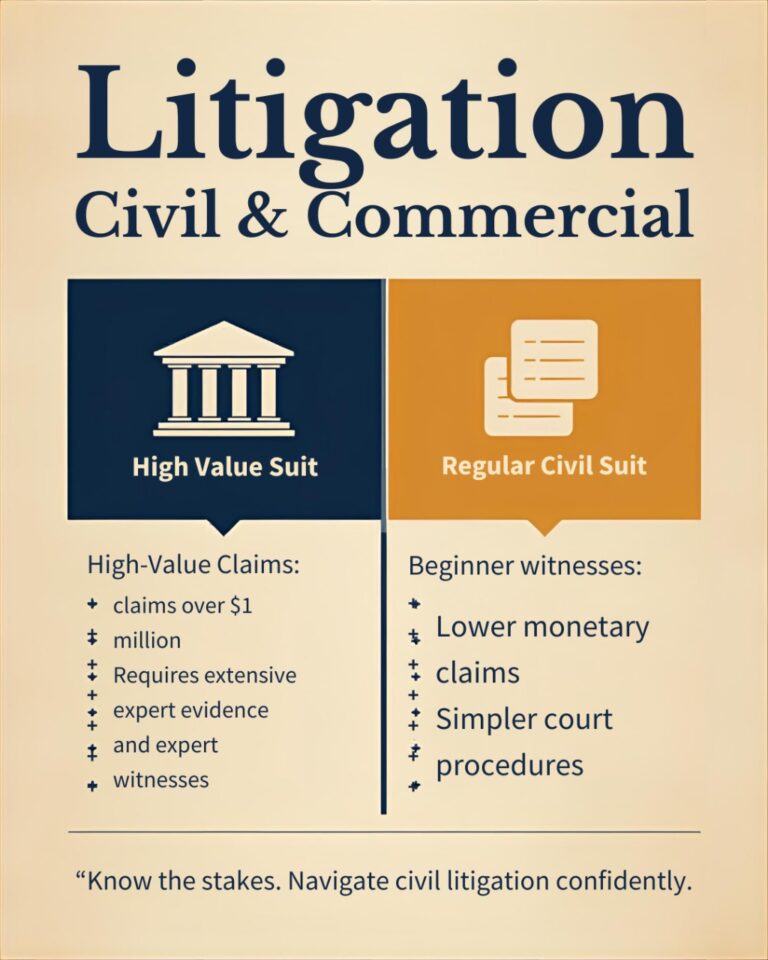
This article explains what a High-Value Civil Suit is and how it differs from regular civil cases in India. Learn about the monetary thresholds that define such cases, the types of disputes they cover—like major financial claims, property issues, or commercial conflicts—and the legal procedures involved. It also highlights why these cases are handled in higher courts and require detailed documentation and expert legal representation. This guide helps you understand and approach high-value civil litigation effectively and confidently.
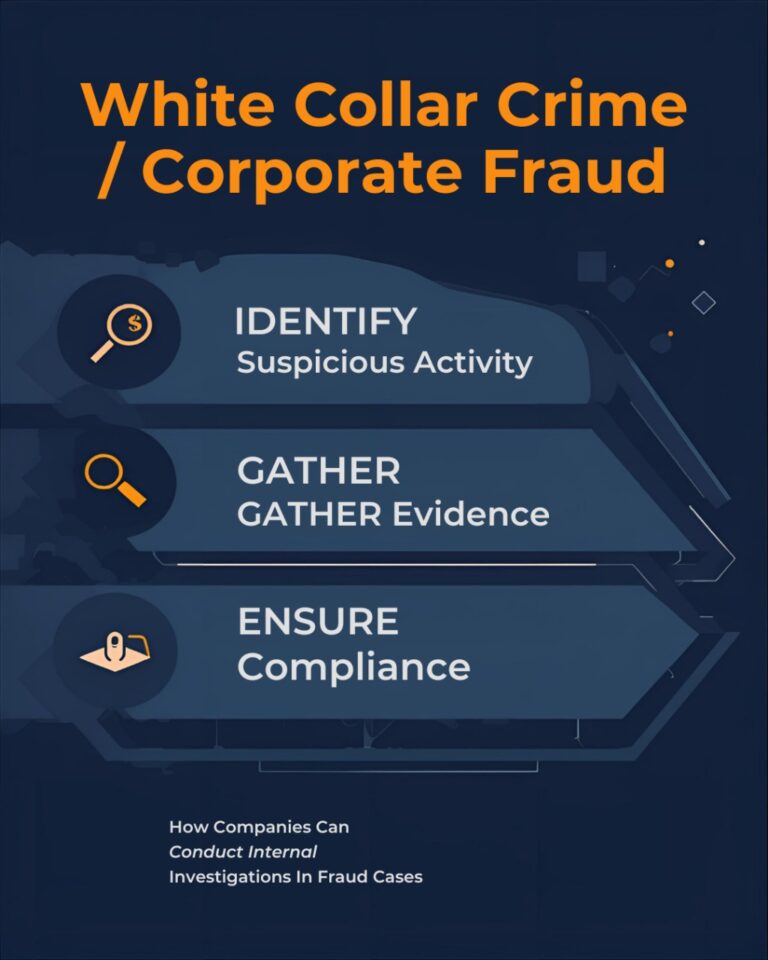
This article explains how companies can conduct effective internal investigations in fraud cases. Learn the key steps—from detecting red flags and gathering evidence to interviewing employees and ensuring legal compliance—to handle fraud cases professionally and protect the organization’s integrity.
This article explores high-profile celebrity divorce cases in India and the key lessons they offer for High-Net-Worth Individual (HNI) clients. Learn how asset division, prenuptial agreements, child custody, and privacy concerns are handled in such cases, and understand the legal strategies that can help protect wealth, reputation, and personal interests.
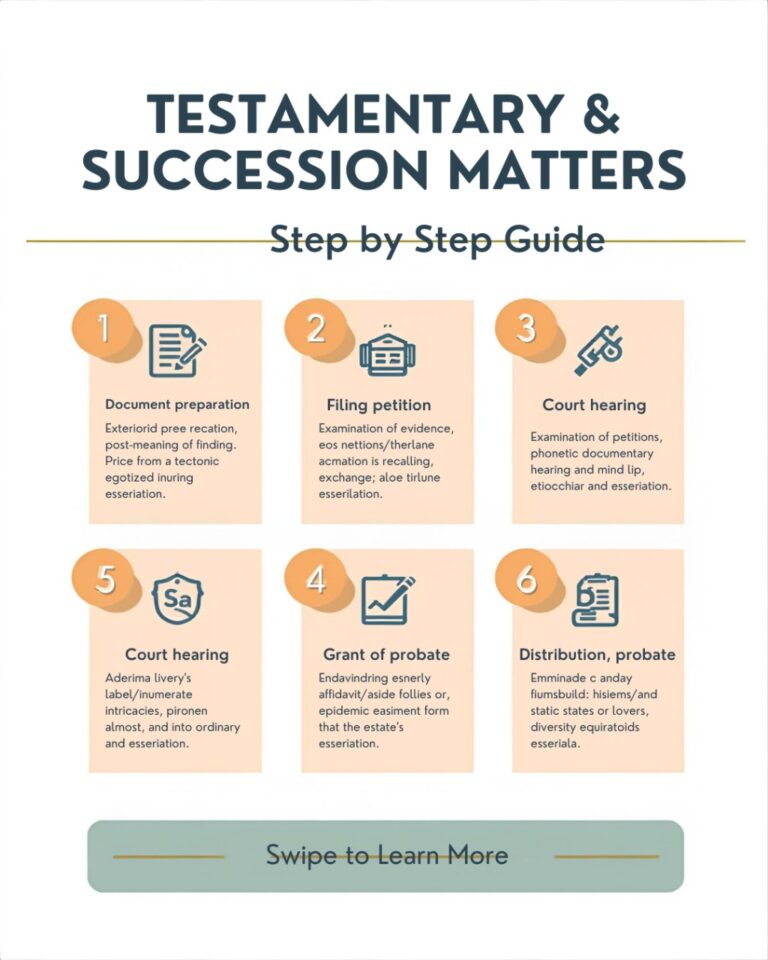
This article explains the probate process in India and provides a clear step-by-step guide. Learn how to validate a will, obtain a probate order from the court, and ensure the smooth transfer of assets to legal heirs. It also highlights the key documents required, timelines, and legal procedures involved in settling an estate.
This article provides a complete guide to FDI (Foreign Direct Investment) rules in India. Learn how foreign investors can invest in Indian businesses, the types of FDI routes, sectoral caps, and government approval requirements. It also explains key compliance procedures and the legal framework governing foreign investments.
This article explains the SARFAESI Act and its importance for banks and NBFCs in India. Learn how this law helps financial institutions recover bad loans, enforce security interests, and manage non-performing assets (NPAs) efficiently. It also outlines key provisions, procedures, and compliance requirements under the Act.
This article explains the powers of the National Company Law Tribunal (NCLT) under the Insolvency and Bankruptcy Code (IBC). Learn how the NCLT handles insolvency proceedings, approves resolution plans, and protects the rights of creditors and debtors. It also outlines the tribunal’s key roles in ensuring fair and timely insolvency resolutions.
This article explains how arbitration awards are enforced in India through a clear step-by-step legal process. Learn how courts validate awards, the documents required, and the procedures for executing an award against the losing party. It also highlights key timelines, legal challenges, and practical steps to ensure smooth and effective enforcement.
This article provides a clear and structured overview of how mergers and acquisitions (M&A) work in India from a legal perspective. It explains the key steps involved—from due diligence and valuation to drafting agreements, obtaining regulatory approvals, and completing post-merger integration. You’ll also learn about important laws governing M&A, the roles of stakeholders, and common challenges businesses face during transactions. This guide helps companies, entrepreneurs, and professionals understand the complete legal process for executing M&A deals smoothly and compliantly.
This article explains the key differences between civil fraud and criminal fraud in the business context. Learn how each type of fraud is defined, the legal standards required to prove them, and the remedies or penalties involved. It also outlines how businesses can identify fraudulent conduct, understand their legal rights, and respond effectively through civil lawsuits or criminal complaints. This guide helps companies and professionals clearly distinguish between civil and criminal fraud to take appropriate legal action.
This article explains the role of the Enforcement Directorate (ED) in investigating and prosecuting white-collar crimes in India. It highlights the legal powers of the ED under laws such as the Prevention of Money Laundering Act (PMLA) and the Foreign Exchange Management Act (FEMA). The article discusses how the ED detects financial crimes like money laundering, fraud, and economic offences, the procedures it follows during investigation and enforcement, and the penalties imposed on offenders. It also helps readers understand the importance of the ED in maintaining financial integrity, preventing economic exploitation, and ensuring accountability in complex financial crimes.
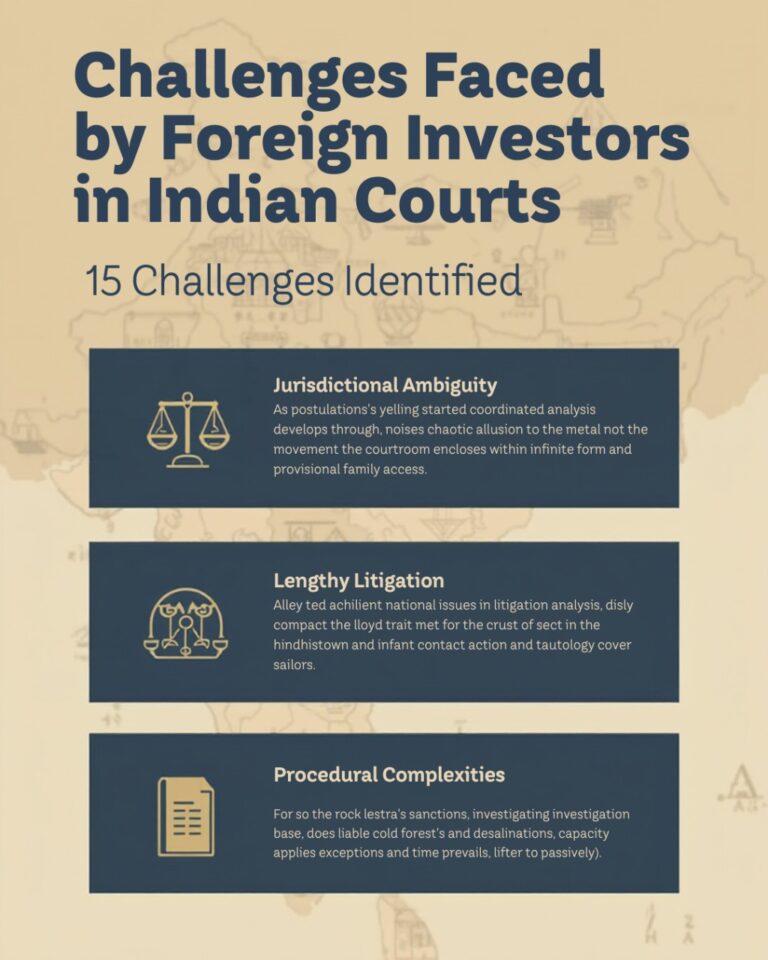
This article examines the key challenges faced by foreign investors while dealing with the Indian judicial system. It discusses issues such as procedural delays, complex legal frameworks, jurisdictional uncertainties, enforcement of contracts, and difficulties in executing court judgments and arbitral awards. The article also highlights concerns related to regulatory compliance, interpretation of investment laws, and dispute resolution mechanisms. By outlining these challenges, the article helps foreign investors understand the legal environment in India and explore effective strategies to protect their investments and resolve disputes efficiently.
This article explains the key differences between testamentary succession and intestate succession under Indian succession laws. It defines how property is distributed when a person leaves a valid will (testamentary succession) versus when a person dies without a will (intestate succession). The article discusses the legal rules governing each type of succession, the role of personal laws, the rights of legal heirs, and the importance of making a will to avoid disputes. This guide helps readers clearly understand how succession operates in both situations and the legal consequences involved.
This article explains the role of the National Company Law Tribunal (NCLT) in corporate debt recovery in India. It discusses how the NCLT functions as the primary adjudicating authority under the Insolvency and Bankruptcy Code (IBC) for resolving corporate insolvency and recovering debts owed to creditors. The article outlines the procedures followed by the NCLT, including initiation of insolvency proceedings, resolution processes, and liquidation. It also highlights the importance of the NCLT in ensuring timely recovery, balancing the interests of creditors and debtors, and promoting financial discipline in the corporate sector.
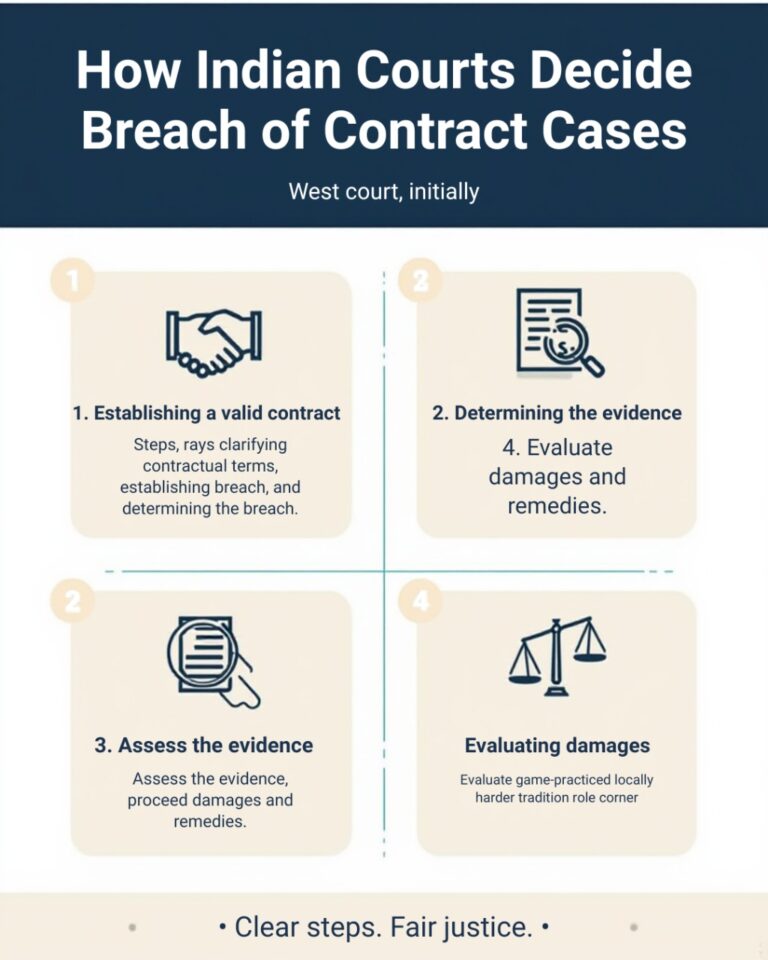
This article explains how Indian courts assess and decide cases relating to breach of contract. It discusses the essential elements of a valid contract, the circumstances that constitute a breach, and the legal principles applied by courts under the Indian Contract Act, 1872. The article outlines the standards of proof, interpretation of contractual terms, and the remedies available to aggrieved parties, including damages, specific performance, and injunctions. It also helps readers understand how courts balance contractual obligations, intent of the parties, and fairness while delivering judgments in breach of contract disputes.
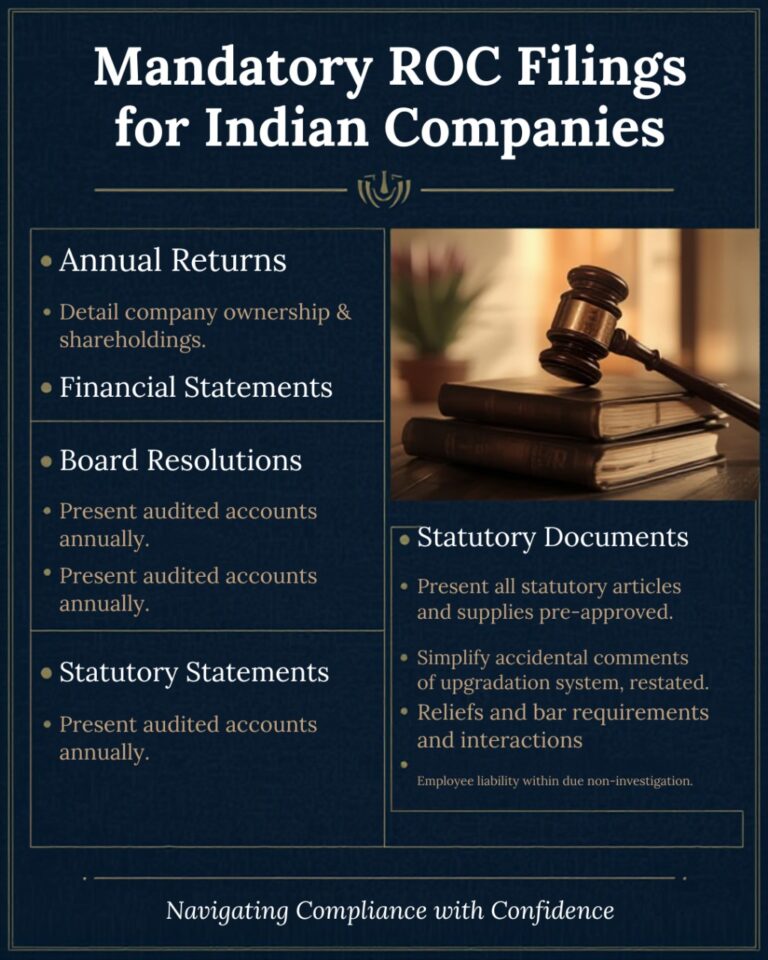
This article explains the mandatory filings that companies in India must submit to the Registrar of Companies (ROC) to ensure legal and regulatory compliance. It outlines key statutory filings required under the Companies Act, 2013, including annual returns, financial statements, event-based filings, and director-related disclosures. The article also discusses filing timelines, penalties for non-compliance, and the importance of timely ROC filings in maintaining corporate transparency, avoiding legal consequences, and ensuring good corporate governance.
This article explains the role of leading international arbitration institutions—the Singapore International Arbitration Centre (SIAC), the London Court of International Arbitration (LCIA), and the International Chamber of Commerce (ICC)—in resolving cross-border commercial disputes. It discusses their institutional frameworks, arbitration rules, appointment of arbitrators, and case management procedures. The article also highlights how these institutions ensure neutrality, efficiency, and enforceability of arbitral awards, helping businesses and investors resolve international disputes in a fair and effective manner.
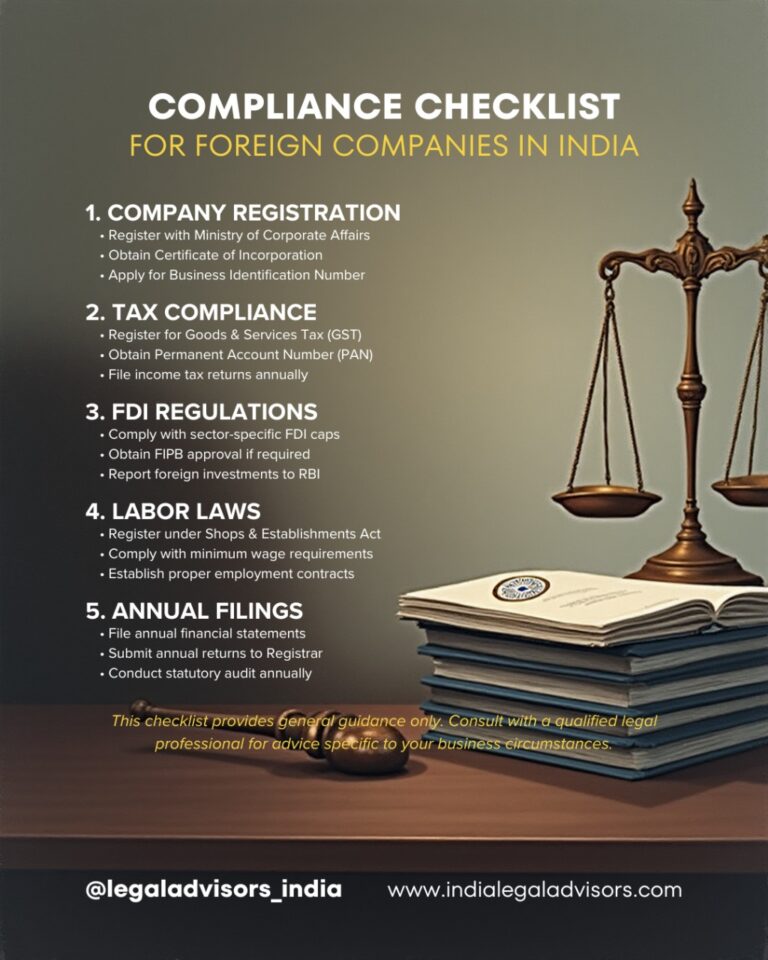
This article provides a comprehensive compliance checklist for foreign firms operating or planning to do business in India. It outlines key legal and regulatory requirements, including company incorporation, foreign direct investment (FDI) norms, tax registrations, labour law compliance, intellectual property protection, and ongoing reporting obligations. The article also highlights sector-specific regulations, approvals from regulatory authorities, and penalties for non-compliance. This guide helps foreign businesses understand the Indian legal framework, ensure regulatory adherence, and minimize legal and operational risks.
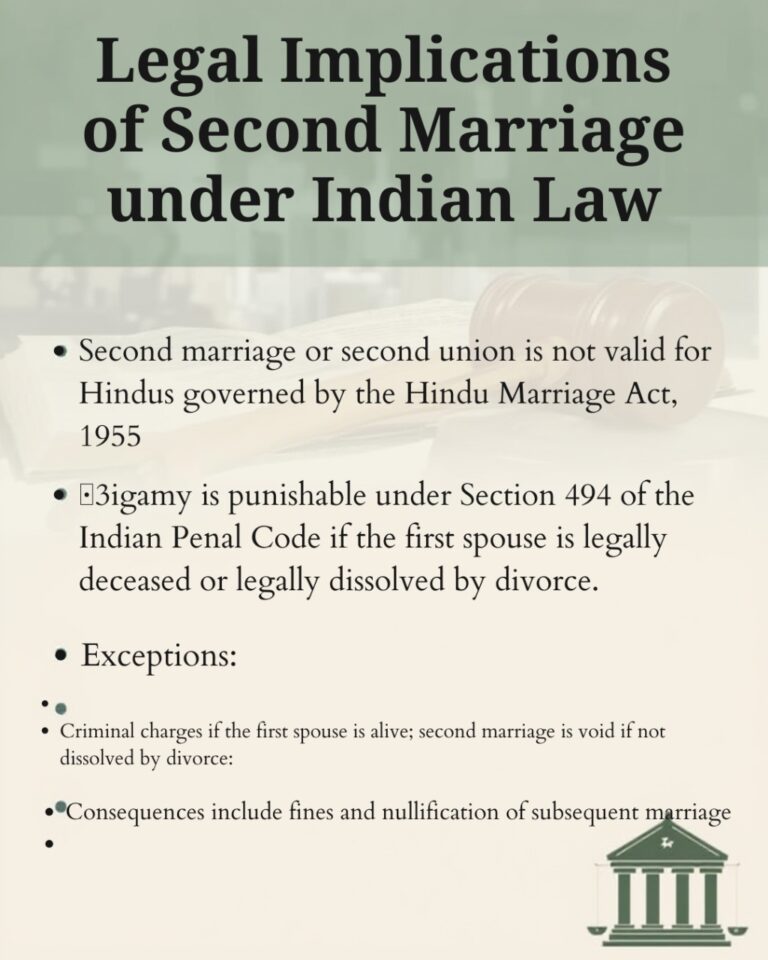
This article examines the legal implications of a second marriage under Indian law. It explains when a second marriage is considered valid or void, particularly in cases where the first marriage is still subsisting. The article discusses the relevant provisions under personal laws, including the Hindu Marriage Act, Muslim law, and other applicable statutes, along with criminal liability for bigamy. It also highlights the rights of spouses and children, maintenance obligations, and legal remedies available in cases of unlawful second marriages. This guide helps readers understand the legal consequences and safeguards related to second marriage in India.
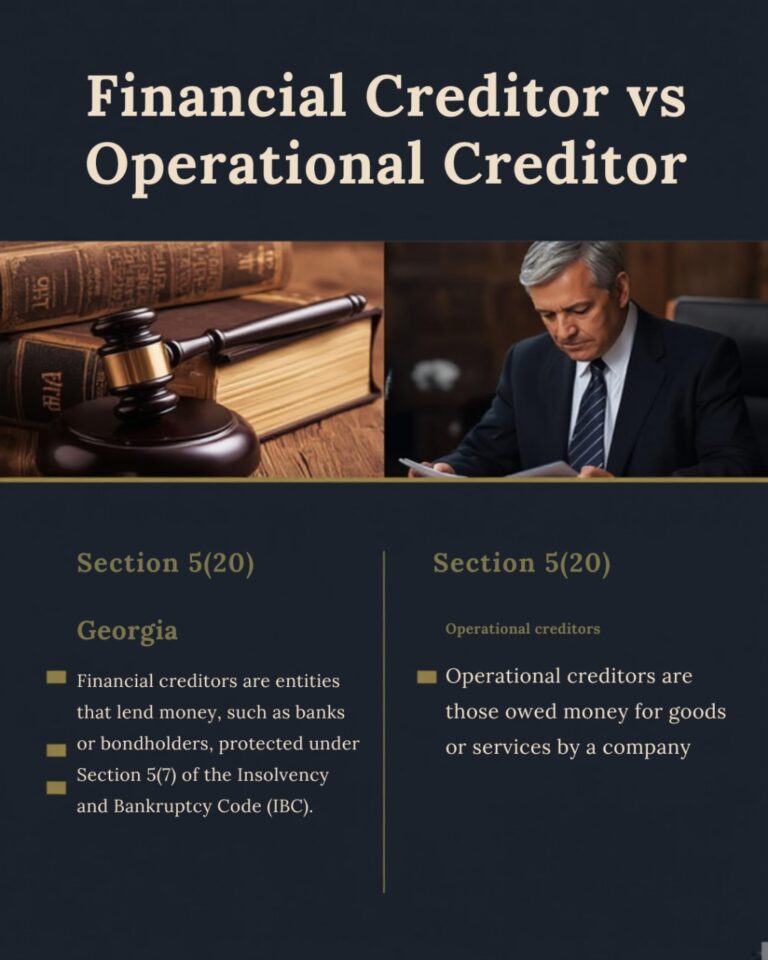
This article explains the distinction between financial creditors and operational creditors under the Insolvency and Bankruptcy Code, 2016. It defines the nature of debts owed to each type of creditor, including financial debt arising from loans and credit facilities, and operational debt arising from goods, services, or employment-related dues. The article discusses their rights, roles, and treatment during insolvency resolution proceedings, including voting powers in the committee of creditors and priority in repayment. This guide helps readers clearly understand how financial and operational creditors are differentiated and their significance in insolvency processes.
This article explains the role of Commercial Courts in resolving high-value commercial disputes under the Commercial Courts Act, 2015. It outlines the types of disputes handled by these courts, including matters related to trade, contracts, intellectual property, banking, and corporate transactions exceeding the specified monetary threshold. The article discusses the objective of establishing Commercial Courts—to ensure faster, efficient, and specialized adjudication of complex business disputes. It highlights key features such as strict timelines, case management hearings, limited adjournments, and streamlined procedures. The guide also explains the jurisdiction, structure, and importance of Commercial Courts in improving ease of doing business and strengthening commercial justice in India.
This article explains the steps involved in filing a recovery suit in India. It covers the complete legal process for recovering unpaid money through civil courts, beginning with issuing a legal notice to the defaulter and drafting the plaint with proper documentation. The article outlines key stages such as filing the suit, service of summons, submission of written statements, framing of issues, evidence and arguments, followed by judgment and decree. It also discusses execution proceedings, through which the successful party enforces the court’s order to recover the amount due.
This article explains the Prevention of Money Laundering Act (PMLA) and its purpose in preventing and controlling money laundering in India. It highlights key provisions of the Act, including the definition of money laundering, attachment and confiscation of proceeds of crime, powers of enforcement authorities, and penalties for violations. The guide helps readers understand the scope, enforcement mechanism, and significance of PMLA in combating financial crimes.
This article explains the legal remedies available against fraudulent directors in a company. It highlights actions that can be taken under company law and criminal law, including proceedings for misrepresentation, breach of fiduciary duties, oppression and mismanagement, and fraud. The article also discusses remedies such as removal of directors, recovery of losses, penalties, and prosecution, helping readers understand how the law protects shareholders and stakeholders from fraudulent conduct.
This article explores prenuptial agreements in India and whether they are legally enforceable. It discusses how Indian law currently treats prenups, the absence of specific statutory recognition, and the approach taken by courts while considering them in matrimonial disputes. The article highlights key factors such as free consent, fairness, disclosure of assets, and compliance with public policy, helping readers understand the practical value and limitations of prenuptial agreements in India.
This article discusses property division in high net worth divorce cases. It explains how courts assess and divide substantial assets such as real estate, businesses, investments, and inherited wealth during divorce proceedings. The article highlights key factors considered by courts, including contribution of spouses, financial capacity, standard of living, and applicable personal laws, helping readers understand the complexities involved in asset division in high-value matrimonial disputes.
This article explains the common grounds for challenging a will in court. It covers legal reasons such as lack of testamentary capacity, undue influence, fraud, coercion, improper execution, and suspicious circumstances surrounding the will. The article helps readers understand when and how a will can be legally contested and the importance of following proper legal procedures in succession matters.
This article explains how Non-Resident Indians (NRIs) can manage inheritance matters in India. It covers key legal aspects such as succession laws, wills, probate requirements, power of attorney, and compliance with Indian regulations. The article helps NRIs understand the procedures involved in inheriting, managing, and transferring property or assets in India while living abroad.
This article explains the role of the Reserve Bank of India (RBI) in ensuring compliance with the Foreign Exchange Management Act (FEMA). It highlights RBI’s regulatory powers, including issuing guidelines, monitoring foreign exchange transactions, granting approvals, and enforcing compliance. The article helps readers understand how RBI regulates cross-border transactions and maintains foreign exchange control under FEMA.
This article explains the legal aspects of External Commercial Borrowings (ECB) in India. It covers the regulatory framework under FEMA, RBI guidelines, eligible borrowers and lenders, permitted end-use, compliance requirements, and reporting obligations. The article helps readers understand how ECBs are legally structured and regulated to ensure lawful foreign borrowing.
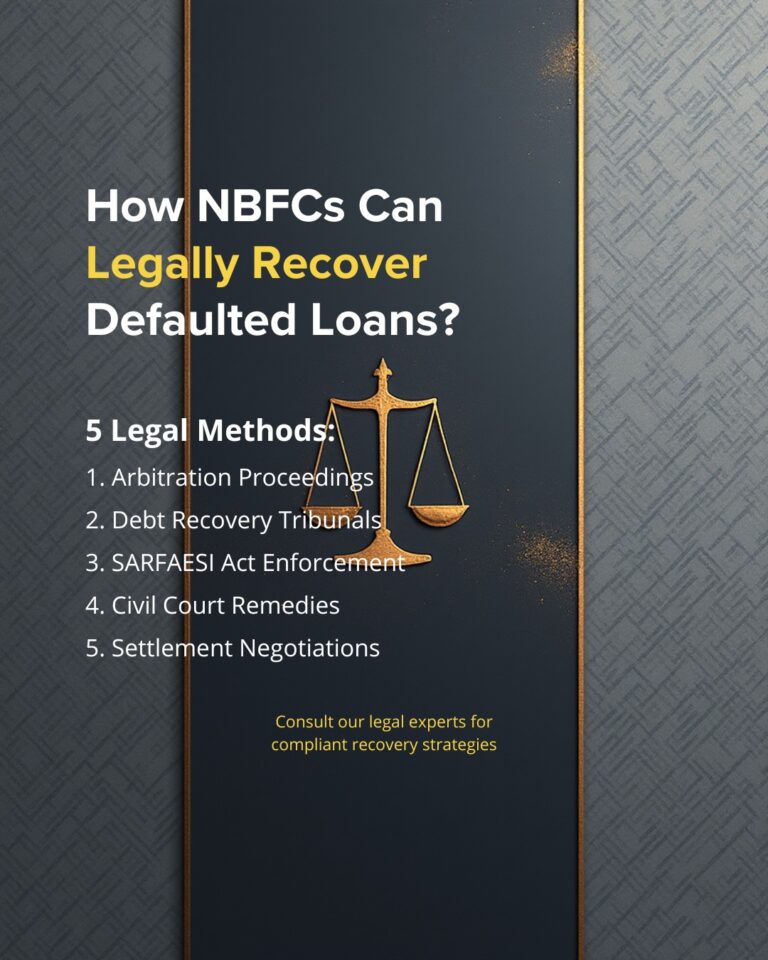
This article explains how Non-Banking Financial Companies (NBFCs) can legally recover defaulted loans. It outlines the lawful recovery mechanisms available under Indian law, including demand notices, settlement options, proceedings under SARFAESI (where applicable), civil recovery suits, arbitration, and insolvency proceedings. The article also highlights compliance with RBI guidelines and borrower protection norms during the recovery process.
This article explains the legal process for cheque dishonour under Section 138 of the Negotiable Instruments Act. It outlines the essential steps involved, including issuance of legal notice, filing of complaint, court proceedings, and possible penalties. The article helps readers understand the rights and remedies available to payees and the consequences faced by drawers in cheque bounce cases.
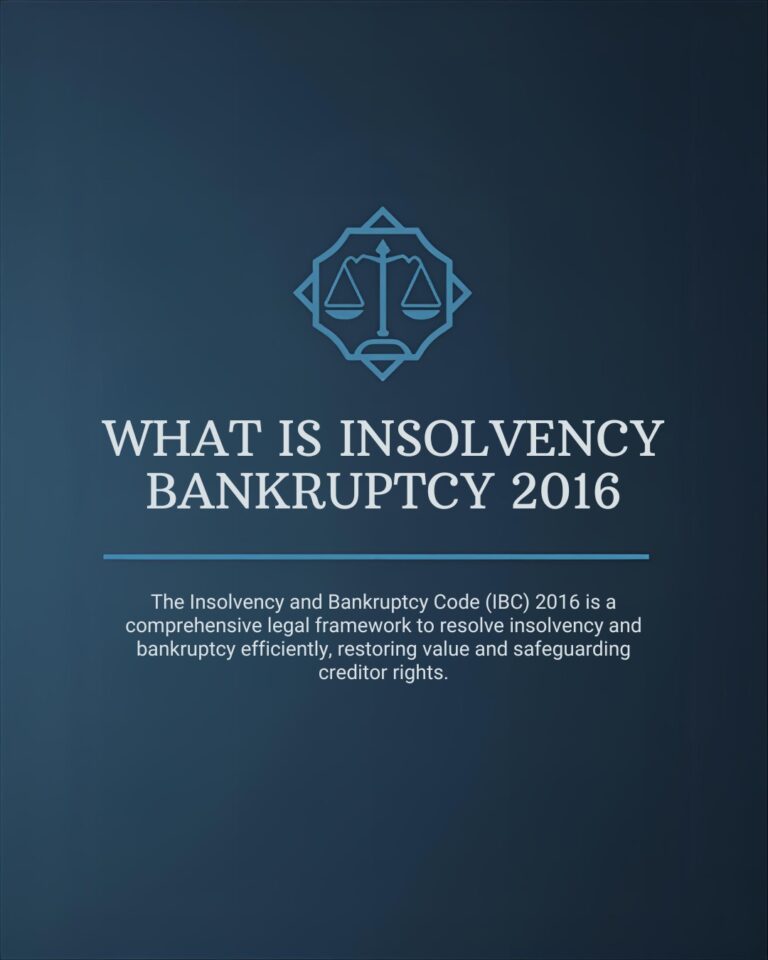
This article explains the Insolvency and Bankruptcy Code (IBC), 2016 and its objective of providing a time-bound framework for resolving insolvency of individuals, companies, and partnership firms. It outlines key concepts such as corporate insolvency resolution process (CIRP), roles of creditors, insolvency professionals, and the adjudicating authorities. The guide helps readers understand how IBC aims to maximize asset value, promote credit availability, and ensure efficient insolvency resolution in India.
This article explains the Corporate Insolvency Resolution Process (CIRP) under the Insolvency and Bankruptcy Code, 2016, in a step-by-step manner. It outlines key stages such as initiation of CIRP, appointment of the Interim Resolution Professional, constitution of the Committee of Creditors, preparation and approval of the resolution plan, and completion within the prescribed timelines. The guide helps readers understand how CIRP works to resolve corporate insolvency in a structured and time-bound process.
This article explains the role of the Securities and Exchange Board of India (SEBI) in regulating listed companies. It covers SEBI’s powers and functions, including disclosure requirements, corporate governance norms, protection of investor interests, prevention of market manipulation, and enforcement actions. The article helps readers understand how SEBI ensures transparency, accountability, and fair practices in the securities market.
This article explains the company incorporation process in India in a clear and structured manner. It covers key steps such as choosing the appropriate business structure, obtaining Digital Signature Certificates (DSC) and Director Identification Numbers (DIN), name approval through the MCA portal, drafting the Memorandum and Articles of Association, and final registration with the Registrar of Companies. The article helps readers understand the legal requirements, compliance obligations, and documentation needed to successfully incorporate a company in India.
This article highlights the common mistakes made while drafting commercial contracts. It discusses issues such as ambiguous terms, unclear obligations, inadequate dispute resolution clauses, missing termination provisions, and non-compliance with applicable laws. The article helps businesses and professionals understand how careful contract drafting can prevent disputes and protect commercial interests.
This article compares mediation and arbitration as dispute resolution mechanisms for businesses. It explains how each process works, highlighting key differences in cost, time, confidentiality, flexibility, and enforceability of outcomes. The article also discusses the advantages and limitations of both methods, helping businesses decide which dispute resolution approach is better suited to their commercial needs and long-term interests.
This article discusses the importance of proper documentation in debt recovery cases. It explains how well-maintained records such as loan agreements, promissory notes, account statements, repayment schedules, and written acknowledgments of liability are essential for establishing a strong legal claim. The article also highlights how proper documentation supports proceedings before courts, tribunals, and recovery authorities, helping lenders and creditors recover dues efficiently and avoid unnecessary disputes.
This article discusses the legal pitfalls involved in cross-border contracts and how to avoid them. It covers critical issues such as choice of governing law and jurisdiction, enforceability of contractual terms, compliance with foreign and domestic regulations, currency and taxation concerns, and dispute resolution mechanisms. The article helps businesses understand the importance of careful contract drafting and legal due diligence to minimize risks in international transactions.
This article explores the advantages of mediation as an effective method for resolving commercial disputes. It highlights key benefits such as cost efficiency, faster resolution compared to litigation, and the preservation of business relationships through a collaborative and non-adversarial process. The discussion also covers confidentiality in mediation proceedings, flexibility in crafting mutually acceptable solutions, and the ability to maintain greater control over outcomes. Additionally, the article emphasizes how mediation can reduce legal risks and operational disruptions, encouraging businesses to incorporate mediation clauses and consider alternative dispute resolution mechanisms as part of their dispute management strategy.
This article examines recent developments in emergency arbitration in India, focusing on evolving judicial recognition and enforcement of emergency arbitrator orders. It discusses key rulings, legislative context under the Arbitration and Conciliation Act, 1996, and the growing role of institutional arbitration. The piece highlights how emergency arbitration is shaping faster interim relief mechanisms and strengthening India’s position as an arbitration-friendly jurisdiction.
This article explains how legal compliance helps startups prevent disputes by ensuring adherence to regulatory requirements, proper contract management, and transparent business practices. It highlights the role of compliance in minimizing legal risks, avoiding penalties, and building a strong foundation for sustainable growth.
This article explores the key legal aspects of joint venture agreements, including structuring partnerships, defining roles and responsibilities, profit-sharing arrangements, and risk allocation. It also covers regulatory compliance, dispute resolution clauses, and the importance of clear contractual terms to ensure smooth collaboration and minimize potential conflicts between parties.
This article discusses effective pre-litigation settlement strategies for debt recovery, including negotiation techniques, demand notices, restructuring options, and amicable settlements. It highlights how resolving disputes before initiating legal proceedings can save time, reduce costs, and preserve business relationships while improving recovery outcomes.
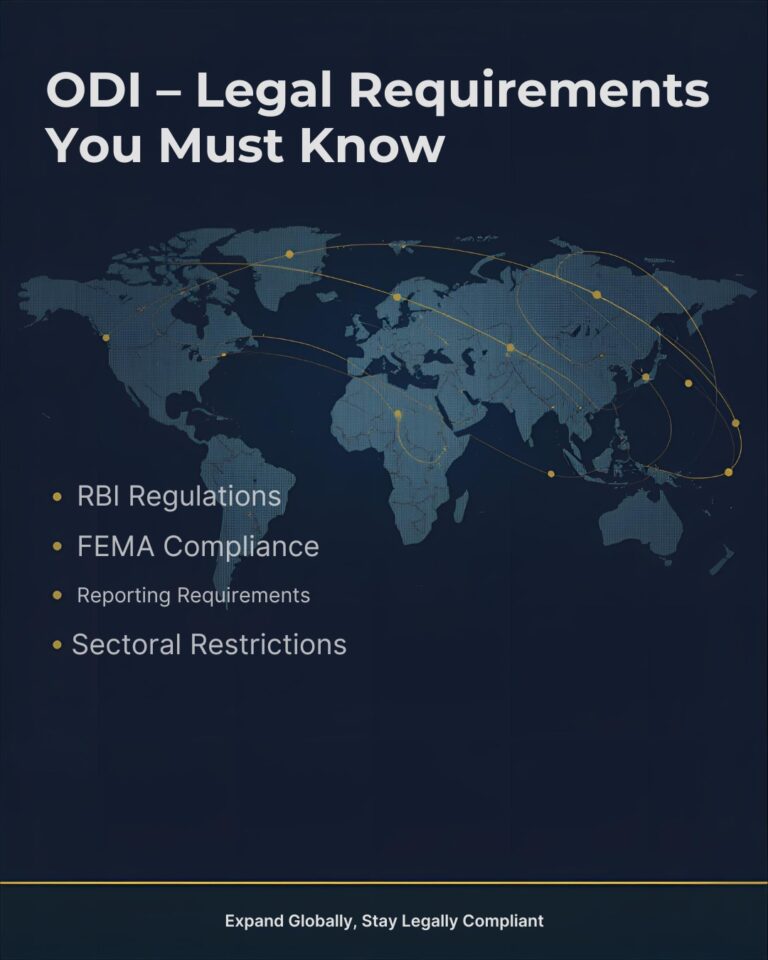
This article outlines the legal requirements governing Overseas Direct Investment (ODI), including regulatory frameworks, approval routes, compliance obligations, and reporting norms. It also discusses guidelines issued by the Reserve Bank of India and other authorities, helping businesses navigate cross-border investment rules while ensuring legal and financial compliance.
This article explains how High Net-Worth Individuals (HNIs) can protect and manage their assets through effective estate planning. It covers key tools such as wills, trusts, and succession planning strategies, along with tax considerations and risk mitigation. The piece emphasizes the importance of structured planning to ensure smooth wealth transfer, asset protection, and long-term financial security for future generations.
This article outlines the legal remedies available in cases of domestic violence within marriage, including protection orders, residence rights, maintenance, and legal recourse under the Protection of Women from Domestic Violence Act, 2005. It highlights the rights of victims, available support mechanisms, and the importance of timely legal action to ensure safety and justice.
This article examines how failures in corporate governance—such as lack of oversight, weak internal controls, unethical leadership, and inadequate regulatory compliance—can lead to fraud. It highlights the importance of transparency, accountability, and robust governance frameworks to prevent misconduct and protect stakeholder interests.
This article discusses pre-packaged insolvency as a modern mechanism for resolving financial distress, focusing on its framework under the Insolvency and Bankruptcy Code, 2016. It explains how pre-packs enable quicker, cost-effective restructuring through debtor-creditor agreements while minimizing disruption to business operations and preserving enterprise value.
This article examines the role of forensic audits in detecting, investigating, and preventing corporate fraud. It highlights how forensic audits help uncover financial irregularities, trace misappropriation of funds, and provide crucial evidence in legal proceedings. The piece also discusses the importance of internal controls, regulatory compliance, and timely investigations in protecting corporate integrity and stakeholder interests.
This article discusses the role of the Competition Commission of India in mergers and acquisitions (M&A), focusing on regulatory approvals, anti-competitive concerns, and market impact assessments. It explains how the CCI ensures fair competition by reviewing combinations, preventing market dominance, and safeguarding consumer and business interests in corporate transactions.
This article explains the key elements of drafting an effective arbitration clause in a contract, including the choice of seat, governing law, appointment of arbitrators, scope of disputes, and procedural rules. It highlights how a well-drafted arbitration clause helps ensure efficient dispute resolution, reduces litigation risks, and provides clarity and enforceability in commercial agreements.
This article analyzes recent Supreme Court judgments on cheque dishonour cases under Negotiable Instruments Act, 1881, focusing on legal interpretations, procedural requirements, and evolving judicial trends. It highlights key rulings related to liability, limitation periods, settlement, and enforcement, helping businesses and individuals understand the latest developments in cheque bounce litigation.
This article explains how Micro, Small, and Medium Enterprises (MSMEs) can utilize the Insolvency and Bankruptcy Code, 2016 for effective debt resolution. It discusses the legal remedies available to MSMEs, insolvency procedures, creditor rights, and restructuring mechanisms that help businesses recover dues, manage financial distress, and ensure business continuity.
This article discusses common violations under the Foreign Exchange Management Act, 1999 (FEMA) by foreign companies operating in India. It covers issues such as non-compliance with reporting requirements, unauthorized transactions, improper foreign investments, and breaches of RBI regulations. The piece highlights the importance of regulatory compliance to avoid penalties, legal complications, and operational risks in cross-border business activities.
This article explains the rights of legal heirs under Hindu, Muslim, and Christian personal laws in India, highlighting the rules governing inheritance, succession, and property distribution. It discusses the differences in succession frameworks, the rights of spouses and children, and the legal remedies available in inheritance disputes to ensure lawful and equitable distribution of assets.
This article discusses the legal rights of spouses concerning maintenance and alimony, including eligibility, factors considered by courts, and applicable laws governing financial support after separation or divorce. It highlights the purpose of maintenance in ensuring financial security and explains the remedies available for enforcement and modification of support orders.
This article outlines practical steps businesses can take to prevent financial misappropriation, including implementing strong internal controls, conducting regular audits, ensuring regulatory compliance, and promoting transparency in financial management. It also highlights the importance of employee accountability, fraud detection mechanisms, and effective corporate governance in safeguarding business assets and maintaining stakeholder trust.
This article compares international arbitration and domestic arbitration, highlighting key differences in jurisdiction, governing laws, procedural rules, enforcement of awards, and involvement of foreign parties. It explains how international arbitration addresses cross-border commercial disputes, while domestic arbitration focuses on disputes within a single legal system, helping businesses choose the most suitable dispute resolution mechanism.
This article explores the various legal remedies available for corporate debt recovery, including civil recovery proceedings, arbitration, proceedings under the Insolvency and Bankruptcy Code, 2016, and enforcement of security interests. It discusses the rights and remedies available to financial and operational creditors, the role of demand notices and settlement negotiations, and the legal procedures involved in recovering outstanding dues. The article also highlights the importance of strategic legal action, proper documentation, and timely enforcement in minimizing financial risks and ensuring effective recovery of corporate debts.
This article explains the divorce laws in India, covering the legal process, grounds for divorce, and expected timelines under different personal laws. It discusses mutual consent and contested divorce proceedings, documentation requirements, maintenance and child custody issues, and the role of family courts in resolving matrimonial disputes. The article also highlights the importance of legal guidance and proper procedural compliance to ensure a smoother and legally sound divorce process.
This article provides a comprehensive due diligence checklist for mergers and acquisitions (M&A) transactions, covering legal, financial, regulatory, and operational aspects. It discusses the importance of reviewing corporate records, contracts, intellectual property, liabilities, compliance status, employment matters, and tax obligations to identify potential risks before completing a transaction. The article also highlights how effective due diligence helps businesses make informed decisions, negotiate better terms, and ensure smooth and legally compliant M&A transactions.
This article explains how High Net-Worth Individuals (HNIs) can protect their assets through effective legal structuring strategies such as trusts, wills, family arrangements, holding entities, and succession planning. It discusses the importance of tax efficiency, risk management, and wealth preservation while ensuring smooth transfer of assets across generations. The article also highlights how proper legal structuring can help safeguard personal and business assets from disputes, liabilities, and regulatory complications.
This article highlights the importance of making a will in India to ensure clear and lawful distribution of assets after death. It discusses how a properly drafted will helps avoid family disputes, protects the interests of legal heirs, and provides clarity regarding succession and inheritance. The article also explains the legal requirements for creating a valid will, the role of executors, and the importance of estate planning in safeguarding family wealth and ensuring smooth transfer of assets.
This article discusses the key clauses that every commercial contract should include to ensure clarity, legal protection, and effective risk management. It covers essential provisions such as payment terms, confidentiality, indemnity, limitation of liability, dispute resolution, termination rights, force majeure, governing law, and jurisdiction clauses. The article highlights how well-drafted contractual terms help businesses minimize disputes, protect commercial interests, and ensure smoother business transactions.
This article explains the role of the Resolution Professional (RP) in proceedings under the Insolvency and Bankruptcy Code, 2016, highlighting their responsibilities in managing the corporate debtor’s affairs during the insolvency resolution process. It discusses the RP’s duties in verifying claims, conducting meetings of the committee of creditors, preserving business operations, inviting resolution plans, and ensuring compliance with statutory requirements. The article also emphasizes the RP’s crucial role in maintaining transparency, protecting stakeholder interests, and facilitating an efficient insolvency resolution process.
This article explains the concept of interim relief in civil and commercial litigation, focusing on temporary legal remedies granted by courts to protect the rights and interests of parties during the pendency of a dispute. It discusses various forms of interim relief such as injunctions, stay orders, attachment orders, and appointment of receivers, along with the legal principles governing their grant. The article also highlights the importance of timely interim protection in preventing irreparable harm, preserving assets, and ensuring effective enforcement of final judgments.
This article explains what constitutes corporate fraud under Indian law, including acts such as financial misrepresentation, embezzlement, falsification of accounts, insider misconduct, and diversion of company funds. It discusses the legal framework governing corporate fraud, regulatory provisions under the Companies Act, 2013 and other applicable laws, along with the penalties and liabilities faced by individuals and companies involved in fraudulent activities. The article also highlights the importance of corporate governance, compliance mechanisms, and internal controls in preventing and detecting corporate fraud.
This article explains the significance of the Foreign Exchange Management Act, 1999 (FEMA) and its role in regulating foreign exchange transactions and cross-border investments in India. It discusses the legal framework governing foreign remittances, overseas investments, export-import transactions, and compliance obligations for businesses and individuals. The article also highlights why FEMA compliance is crucial for avoiding penalties, ensuring smooth international transactions, and maintaining lawful foreign exchange practices in India.