
Legal Aspects of Joint Venture Agreements
- May 18, 2026
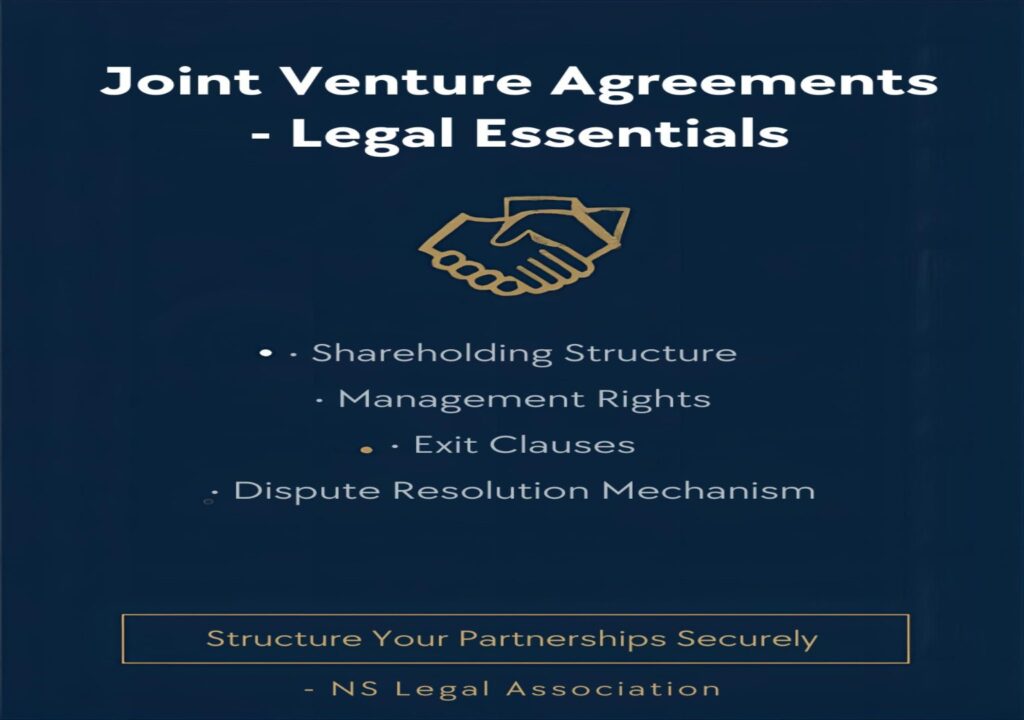
Businesses love joint ventures because they let you pool resources, share technology, crack new markets, and combine expertise. You can set up a JV between two Indian companies, an Indian and a foreign firm, or even between individuals and corporations. It’s pretty flexible.
The catch? Joint ventures can spark all kinds of disputes usually because the agreement wasn’t clear, or people didn’t spell out their rights and duties. If you want to avoid ugly surprises, you need a rock-solid Joint Venture Agreement (JVA). That’s your blueprint. It keeps everyone on the same page, manages risks, and saves you from headaches down the road.
This guide breaks down the key legal stuff you need to know about Joint Venture Agreements in India, without all the jargon.
Why You Need a Joint Venture Agreement
- Sets out who does what
- Stops misunderstandings before they start
- Keeps your investment safe
- Lays out how the JV will be run
- Explains how you can exit if needed
- Cuts down the risk of fights
A good agreement is your safety net.
So, What’s a Joint Venture?
It’s when two or more parties team up for a specific business goal and agree to share the profits, losses, and control. Simple as that.
You can structure a JV as:
- A joint venture company
- A partnership or LLP
- A contract-based JV
Each option comes with its own legal twists.
Why Do People Start Joint Ventures?
- To branch into new markets
- To swap or share technology
- To save on costs
- To build infrastructure
- To focus on R&D
Knowing your goals up front shapes the agreement.
Must-Have Legal Clauses in a JVA
- Capital Contribution
Spells out:
- Who’s paying what at the start
- What form the investment takes (money, assets, etc.)
- Who’s responsible for future funding
No more guessing about who owes what.
- Ownership and Shareholding
Details:
- Who owns how much
- Types of shares
- Who gets to vote
This sets the power balance.
- Management and Control
Covers:
- Who sits on the board
- How key leaders are chosen
- Who makes which decisions
Keeps governance fair.
- Scope of Business
Defines what the JV can and can’t do. Stops partners from wandering off or starting competing businesses on the sly.
- Profit and Loss Sharing
Lays out exactly how money gets split.
- Reserved Matters
Lists big decisions that need everyone’s OK like mergers, borrowing money, or selling assets. This protects minority partners.
- Transfer of Shares
Controls how shares can be sold or transferred. Think right of first refusal, tag-along/drag-along rights, and lock-in periods. Keeps unwanted outsiders out.
- Non-Compete and Confidentiality
Makes sure partners don’t leak secrets or set up as competitors.
- Exit and Termination
Explains how and when you can leave, what counts as default, and how to value shares. No drama, just clear exits.
- Dispute Resolution
Tells you whether you head to arbitration or court if things go sideways.
What About Compliance?
You’ve got to follow:
- The Companies Act, 2013
- FEMA rules if there’s a foreign partner
- The Competition Act
- Any sector-specific laws
Don’t ignore these regulators don’t mess around.
How to Set Up a Joint Venture
Step 1: Talk it out. Agree on what you want.
Step 2: Draw up a term sheet with the main commercial points.
Step 3: Do your homework legal and financial checks.
Step 4: Draft the detailed JVA.
Step 5: Get any approvals you need.
Step 6: Set up the new company or sign the deal. You’re in business.
Common Pitfalls
- Vague wording
- No clear exit plan
- No way to resolve deadlocks
- Skipping compliance
Get these right, or you’ll regret it later.
What Do Courts Say?
Vodafone International Holdings v. Union of India (2012):
- Courts respect the contracts people make.
Indiabulls Housing Finance Ltd. v. Deccan Chronicle Holdings Ltd.:
- Courts will enforce commercial agreements.
In short, if your JVA is clear and fair, the courts have your back.
Challenges in Joint Ventures
- Culture clashes
- Power struggles
- Partners pulling in different directions
- Regulatory red tape
Most of these you can sidestep with a well-drafted agreement.
Conclusion
A Joint Venture Agreement shapes the future of your partnership. Get the details right define rights, lock in protections, and don’t cut corners. It’s worth getting professional help with drafting and negotiation, because a strong agreement saves you time, money, and stress later on.
If you want expert legal advice on setting up or reviewing a Joint Venture Agreement, reach out to Advocate Noor Yaqoob Shaikh he knows the ropes in corporate and commercial law.