
Rights of Legal Heirs in Hindu, Muslim, and Christian Law
- May 22, 2026
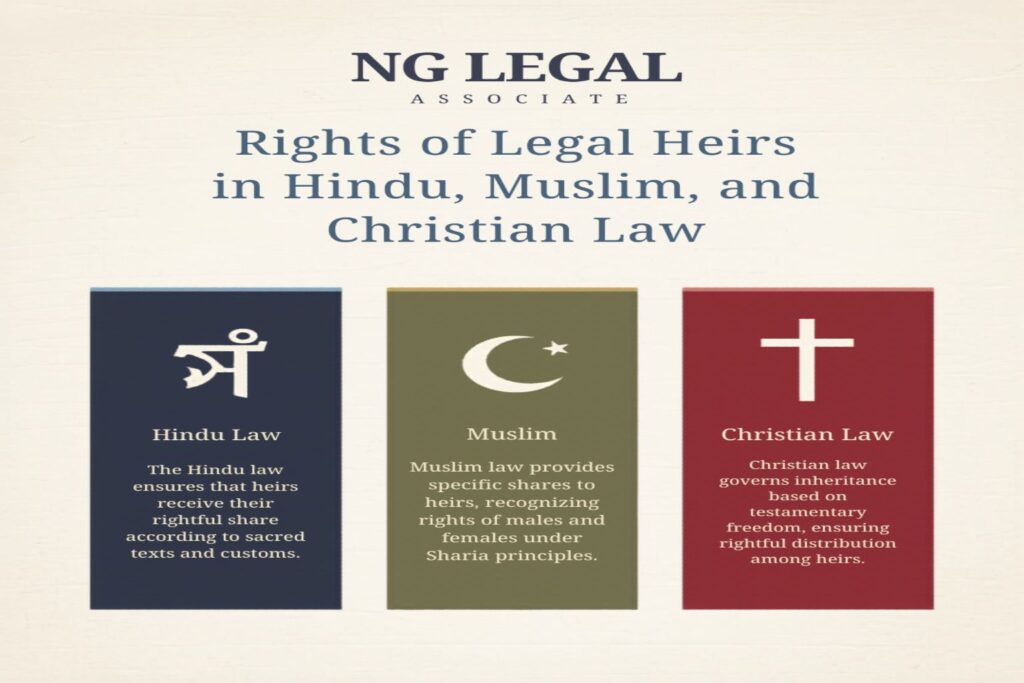
Inheritance isn’t just a legal topic in India it’s at the heart of many family stories, full of emotion and sometimes conflict. When someone passes away, their property and assets don’t just vanish; the law steps in to decide who gets what. But here’s the thing: the rules aren’t the same for everyone. Hindus, Muslims, and Christians each follow different sets of laws. If you want to avoid family quarrels and make sure everything stays fair, it’s smart to understand who has what rights under these different systems.
Each community’s law spells out who counts as a “legal heir,” how things get divided, and what each person can actually claim. In this guide, we’ll walk through the basics for Hindu, Muslim, and Christian families plain and simple, no legal jargon.
So, who is a legal heir, anyway?
Put simply, a legal heir is someone the law says can inherit a person’s property. That usually means your spouse, your kids, your parents, or even other relatives, depending on your family and the law that applies.
Two Ways Succession Happens
- Testamentary (With a Will)
When someone writes a will, that document calls the shots. Property gets distributed just like they wanted.
- Intestate (No Will)
If there’s no will, then you go by what the personal law for that community says.
Hindu Law: The Hindu Succession Act, 1956
This law covers Hindus, Buddhists, Jains, and Sikhs.
There are two basic heir classes:
- Class I Heirs: These folks are at the front of the line—sons, daughters, widows, and mothers. They all share equally in the property.
- Class II Heirs: If there are no Class I heirs, then the second set—like your father, siblings, and some other relatives—steps in.
A big change happened with daughters: Now, daughters have exactly the same inheritance rights as sons. They’re coparceners, which means they have a real stake in joint family property, and they get an equal share. The law aims for gender equality.
Widows aren’t left out. They’re entitled to a share, the right to live in the family house, and financial maintenance if they need it.
Muslim Law: Religious Principles Guide the Way
There’s no one-size-fits-all statute for Muslims; instead, inheritance follows principles found in religious texts.
Key Points:
- Certain heirs always get a fixed share (like wives, husbands, and parents).
- What’s left the residue goes to ‘residuaries’ like sons and daughters.
- Women (daughters, wives, mothers) have set shares.
- Muslims can only dictate what happens to up to one third of their property through a will. The rest must go to the legal heirs.
Christian Law: The Indian Succession Act, 1925
If a Christian passes away without a will, the law says:
- The spouse gets one third of the property.
- The rest goes to the kids.
- If there are no children, the spouse and other relatives share.
Widows and widowers always get a set piece of the inheritance and are protected by law. Children split the rest evenly, no matter if they’re sons or daughters.
How These Laws Differ
Nature of Law:
- Hindu law is written and codified.
- Muslim law is religious.
- Christian law sits in a statute.
Equality:
- Hindus and Christians give sons and daughters equal shares.
- Muslims have set, sometimes unequal shares.
Wills:
- Hindus and Christians have freedom to decide who gets what.
- Muslims are limited—they can only will away a third.
Coparcenary:
- Exists in Hindu law.
- Not in Muslim or Christian law.
Legal Heirs Have Rights And Here’s What They Are
- They can inherit property.
- They can challenge illegal or unfair distributions in court.
- Some heirs can claim maintenance.
- They can demand their share of property, which might mean splitting it up.
How Do You Claim Your Inheritance?
- Figure out who the heirs are.
- Get a legal heir certificate. Banks and government offices often need this.
- Apply for a succession certificate it’s especially useful for movable property (like money in the bank).
- Actually transfer the property to the heirs.
The Courts’ Role
Indian courts watch over the process to keep things fair and protect everyone’s rights. The Supreme Court has made it clear: inheritance rights are about justice and equality, not just money.
Common Problems Families Face
Arguments over property, missing paperwork, the slow legal process, and not knowing what the law says these things crop up all the time. Being proactive helps.
Why Making a Will Matters
A clear will means fewer fights, less confusion, and better protection for your family. It makes the whole process much smoother.
When to Call in the Pros
Lawyers can help you:
- Work out who the rightful heirs are.
- Draft a will that holds up in court.
- Settle any disputes.
- Make sure you don’t miss a step.
Some Practical Tips
- Keep your paperwork (like property records and family documents) organized.
- Learn which law applies to your family and situation.
- Talk openly with family members to avoid surprises.
- Make a will in advance don’t put it off.
- When unsure, get legal advice instead of guessing.
If you’re thoughtful with your planning, you can save your family a lot of stress when the time comes.
Conclusion
In the end, inheritance laws are there to protect families and lay out who gets what. Knowing how your community’s rules work is the best way to keep things fair and drama-free. If you ever feel stuck or need help with succession or property disputes, reach out to a good legal expert like Advocate Noor Yaqoob Shaikh, who knows the ins and outs and can guide you every step of the way.