
Difference Between Financial Creditor and Operational Creditor
- February 04, 2026
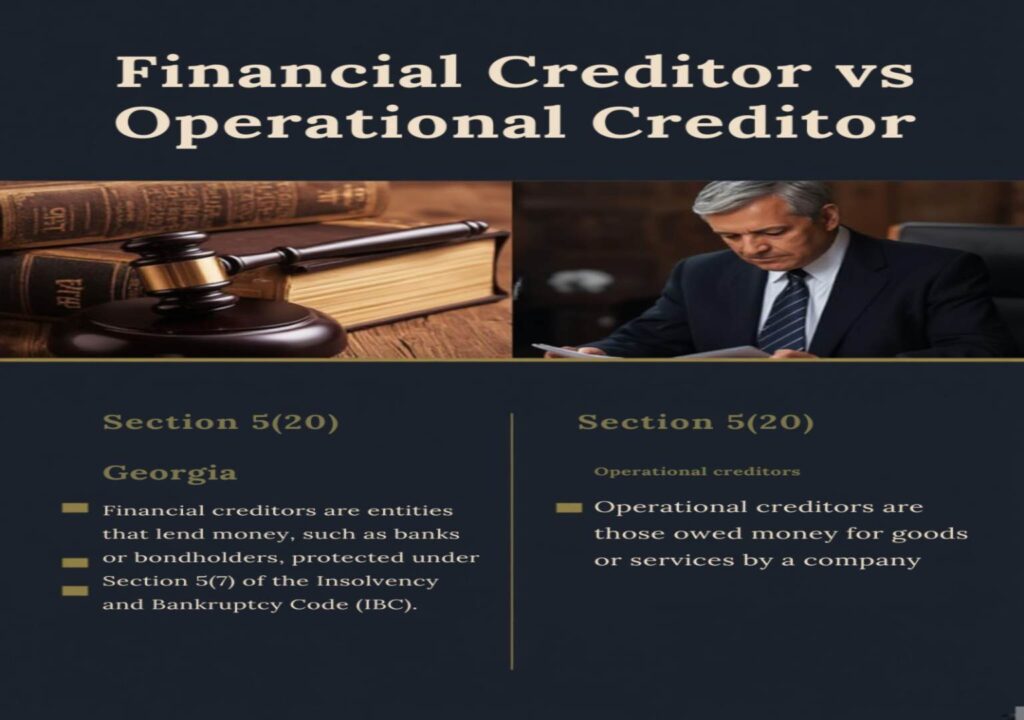
At India, corporate debt recovery and insolvency proceedings are regulated primarily by the Insolvency and Bankruptcy Code, 2016 (IBC). The IBC distinguishes between two categories of creditors: financial creditors and operational creditors. It is critical for businesses, lenders, and service providers to grasp this difference as it decides the procedure, rights, and remedies for recovery of debt.
This article outlines the distinction between financial and operational creditors, their legal rights, and how to recover dues in India.
Why It Matters
- Legal Clarity: Facilitates creditors in selecting the right legal mechanism for recovering debt.
- Effective Debt Recovery: Simplifies the process of making applications under IBC.
- Protection of Rights: Ensures creditors' rights are established and given priority as necessary.
- Prevents Misuse: Stops filing in incorrect categories, which slows down proceedings.
- Compliance with Law: Makes it sure creditors comply with the IBC regime properly.
Who Is a Financial Creditor?
A financial creditor is an individual or organization who has extended financial debt to a
corporate debtor. According to Section 5(7) of the IBC, financial debt involves money lent or any financial commitment under a contract.
Key Features of a Financial Creditor:
- Advances loans, debentures, or credit facilities to the corporate debtor.
- Banks, financial institutions, or bondholders can be them.
- Entitled to file insolvency proceedings under Section 7 of the IBC if the debtor is in default.
- Claims are typically evidenced by contracts such as loan agreements, promissory notes, or debenture trust deeds.
- Priority for repayment in liquidation is above operational creditors under Section 53 of the IBC.
Example:
Bank A lends ₹10 crore to Company X, and Company X fails to repay, then Bank A will be a financial creditor and can file a petition under Section 7 to NCLT to start the insolvency
proceedings.
Who Is an Operational Creditor?
An operational creditor is an individual or group that has provided goods or services to a
corporate debtor but has not been paid. Operational debt has been defined in Section 5(20) of the IBC as claims relating to goods supplied, services provided, or wages owed. Key Features of an Operational Creditor:
- Covers suppliers, vendors, employees, and service providers.
- Are able to file under Section 9 of the IBC for recovery of overdue dues.
- Claims typically pertain to invoices, work orders, contracts, or wages owed.
- Operative creditors rank lower than financial creditors in liquidation.
- Do not take action against financial debt but play a pivotal role in insolvency resolution.
Example:
If Supplier B supplies raw materials amounting to ₹50 lakh to Company X and Company X does not pay, then Supplier B is an operational creditor and can make an application under Section 9 to NCLT.
Important Differences between Financial and Operational Creditors


Judicial Remarks regarding Financial and Operational Creditors
Innoventive Industries Ltd. v. ICICI Bank (2018, NCLAT)
The Tribunal made it clear that financial creditors can file insolvency proceedings under Section 7 at the earliest upon default.
Mobilox Innovations v. Kirusa Software (2018, Supreme Court)
The Supreme Court reiterated that operational creditors need to comply with Section 8 notice procedure before approaching NCLT.
Swiss Ribbons Pvt. Ltd. v. Union of India (2019)
The Court reaffirmed that financial creditors dominate the CoC, with only operational creditors possessing claim rights without voting rights in corporate insolvency resolution processes.
Practical Problems Confronted by Creditors
- Nature of Debt Dispute: Companies can dispute whether a claim is operational or financial, stalling proceedings.
- Default Documentation: Inconsistent bills or contracts can stall filing.
- Recovery Delays: Resolution plans could not completely satisfy operational creditors.
- Complexity in Claims: Financial creditors depend on loan agreements, whereas operational creditors might have to establish delivery of goods or services.
- Coordination Between Creditors: There might be disputes between operational and financial creditors in the process of insolvency resolution.
Best Practices for Creditors
Proper Documentation:
Document loans, invoices, or dues relating to employment, and have them signed.
Timely Filing:
Proceed to NCLT at the earliest upon default to avoid diversion of assets.
Follow IBC Procedures:
Financial creditors: Section 7; operational creditors: Section 9.
For operational creditors, send a Section 8 demand notice prior to filing.
Legal Consultation:
Take the help of experts to go through complex insolvency procedures effectively.
Regular Monitoring:
Keep checking corporate debtor's financial well-being to respond promptly in case of default.
Conclusion
The differentiation between operational creditors and financial creditors under the IBC is key to efficient corporate debt recovery in India. Financial creditors are preoccupied with loans and financial instruments, have superior priority, and dominate the resolution process through the Committee of Creditors. Operational creditors may have no voting rights, but they can pursue claims for unpaid services, goods, or wages.
Knowing these roles assists creditors in taking the appropriate legal action, safeguarding their interests, and facilitating effective recovery. Proper documentation, prompt action, and legal advice are important to ensure maximum recovery in terms of the IBC regime.
For legal support regarding debt recovery or insolvency proceedings, you may connect with Advocate Noor Yaqoob Shaikh.