
How Companies Can Conduct Internal Investigations in Fraud Cases.
- November 04, 2025
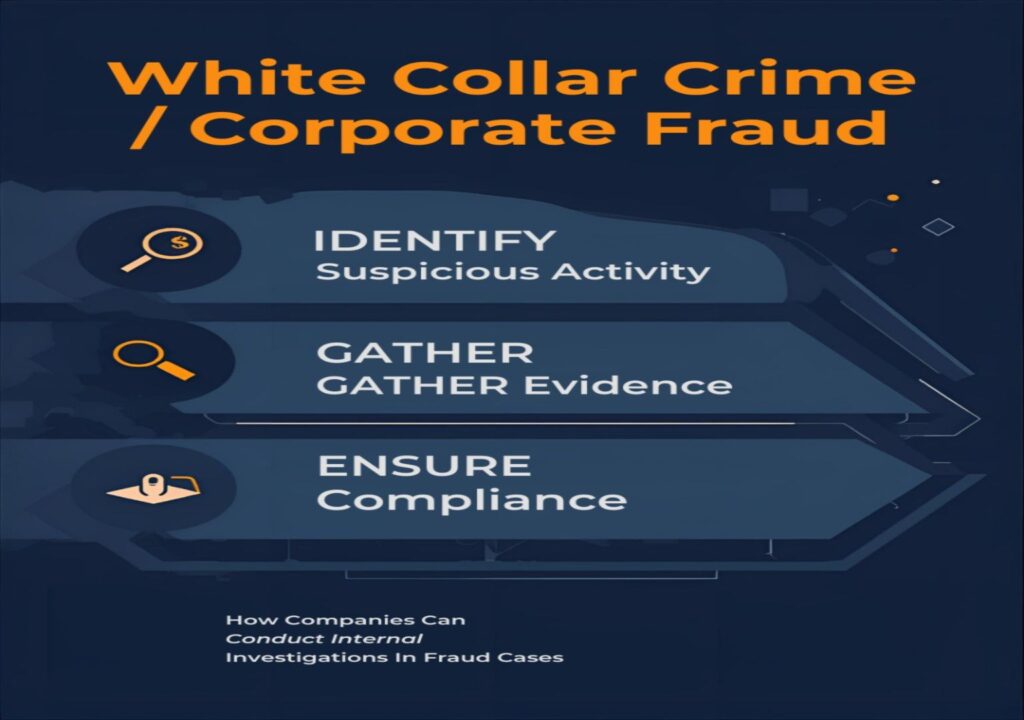
Fraud against an organization may lead to not only monetary losses but also severe reputational loss. Whether it is employee malfeasance, financial falsification, or abuse of organizational assets, fighting fraud needs to be done through a systematic and legally admissible process.
This manual outlines how Indian companies can effectively investigate fraud cases internally in a manner that remains compliant with the law while protecting organizational interests.
Why Internal Investigations Are Important
- Detect Wrongdoing Early– Early detection of fraud reduces losses.
- Protect Reputation– An open and just investigation procedure gives confidence to employees, investors, and regulators.
- Compliance – Authorities like SEBI, RBI, and the Serious Fraud Investigation Office (SFIO) want firms to have robust internal checks.
- Legal Readiness – An internal investigation lays the groundwork for legal action, if necessary, against wrongdoers.
Common Scenarios of Corporate Fraud
- Employee embezzlement using fraudulent invoices
- Bribery or kickbacks in vendor agreements
- Insider trading or abuse of confidential company information
- Manipulation of accounting records to deceive stakeholders
- Misappropriation of company assets or property
Step-by-Step Process for Internal Investigations
1. Initial Detection
- Fraud can be detected through internal audits, whistleblowers, unusual financial transactions, or complaints.
- Immediate action is required by companies to save evidence (emails, transaction records, CCTV).
2. Establishing an Investigation Committee
- Establish an impartial team with compliance officers, HR representatives, and external legal advisers.
- Be independent to prevent bias or conflict of interest.
3. Defining the Scope of Investigation
- Specifically define what is to be investigated (e.g., financial misappropriation between 2022–2024).
- Establish timelines and reporting mechanisms.
4. Evidence Collection and Preservation
- Retrieve documents, emails, phone records, and financial documents.
- Interview important employees, yet always preserve records of consent and equity.
- Indian courts have placed importance on the fact that "investigations must be fair, impartial, and directed to truth, not persecution" (Delhi High Court, 2018).
5. Employee Interviews
- Conduct interviews in secret.
- Make employees aware of their rights when questioned.
- Record all statements carefully.
6. Reporting Investigation Findings
- Prepare a comprehensive report outlining:
- Nature of fraud
- Evidence gathered
- Individuals involved
- Financial and reputational cost
- Recommend disciplinary action or judicial proceedings.
7. Corrective Action
- Disciplinary actions: suspension, dismissal, or recovery proceedings.
- Legal action: registering police complaints, approaching SEBI/SFIO, or filing civil suits.
- Review of policy: improve internal audit and compliance systems.
Judicial Observations on Corporate Fraud
1. N. Narayanan v. SEBI (2013)
The Supreme Court held: “Corporate fraud strikes at the very root of trust in the
economy; deterrent action is essential.”
2. CBI v. Ramesh Gelli (2016)
The Court emphasized that fraudulent actions by company officers can attract both civil and criminal liability.
3. Delhi High Court (2018)
Stated: “Internal corporate inquiries must balance fairness to the accused with the
company’s right to protect itself.”
Challenges Companies Face
- Employee retaliation or intimidation of witnesses
- Destruction of electronic evidence
- Confidentiality breaches during the investigation
- Balancing transparency with protecting the company’s image
Conclusion
Cases of fraud may destabilize a business if not treated with caution. Through the establishment of formal internal investigations, businesses are able to safeguard their assets, reputation, and legal position.
For legal advice on addressing suspected fraud or corporate misconduct, you may connect with Advocate Noor Yaqoob Shaikh.